
Key Reasons for TVM
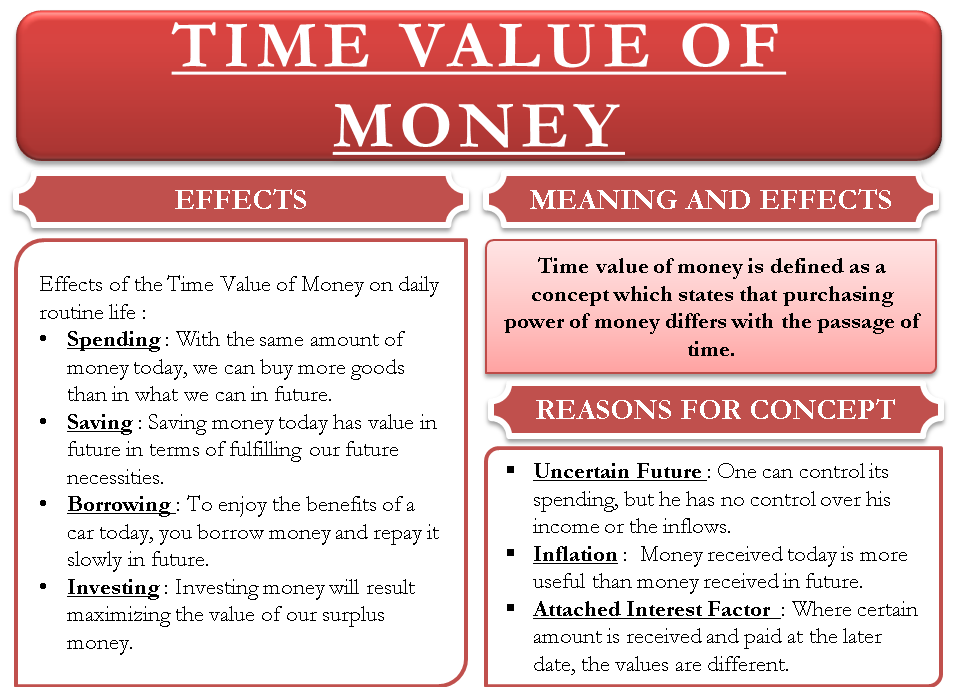
- Earning Potential (Opportunity Cost): Money you have now can be invested to earn interest, growing your wealth; a future payment misses out on this growth.
- Inflation: The rising cost of goods and services reduces the purchasing power of money over time, making future money less valuable.
- Risk/Uncertainty: There's always a chance that a promised future payment won't be received, making immediate money more secure
- Investing Today: 100 today, invested at 5% interest for one year, becomes ₹105, showing its growth potential.
- Future Value: The present ₹100 is worth more than *100 a year from now because the ₹100 today can become ₹105.
- Present Value: Calculating what a future amount (e.g., 1,200 in two years) is worth today, discounted by an interest rate, shows its equivalent current value.
Key Factors in TVM Calculations
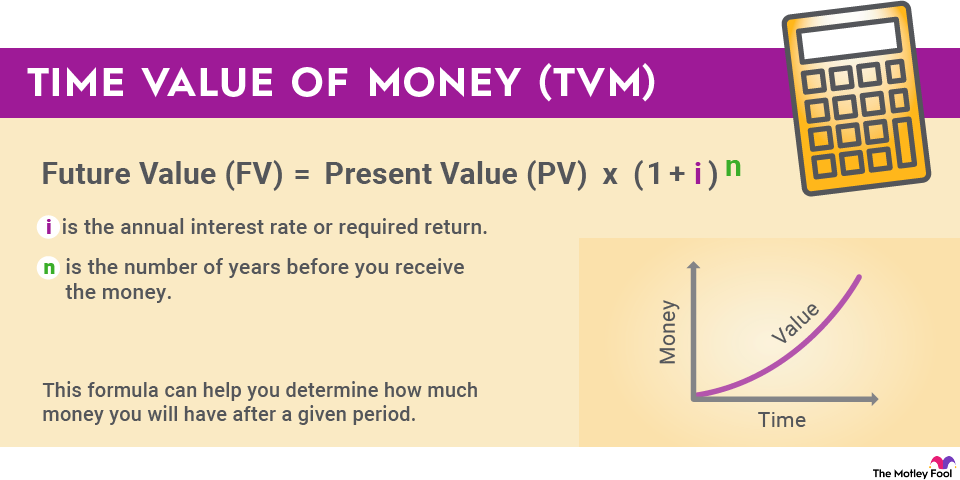
- Present Value (PV): The current worth of a future sum.
- Future Value (FV): The value of an investment at a future date.
- Interest Rate (i): The rate of return or cost of borrowing money.
- Time Period (t): The length of time the money is invested or borrowed.
Practical Applications
Comparing investment options, Determining loan payments and mortgage costs, and Valuing future cash flows for business decisions.