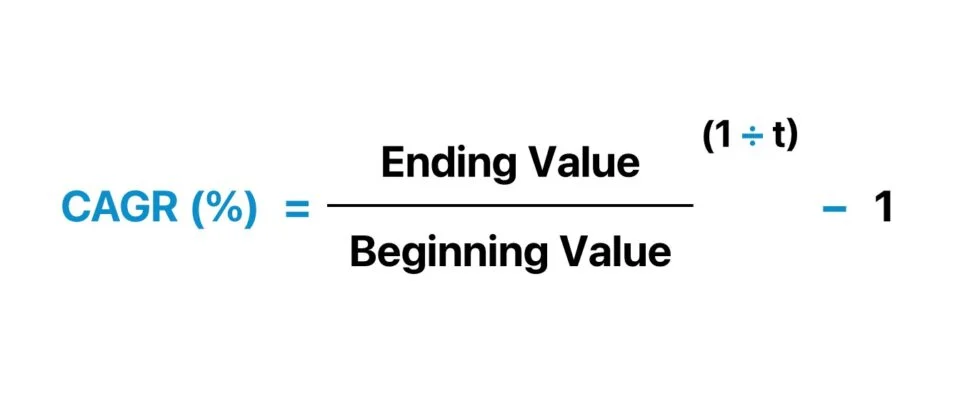
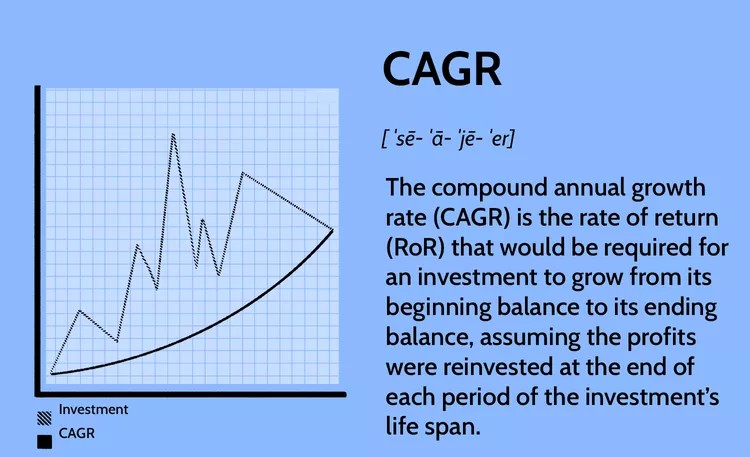
What is a good CAGR ratio?
A good CAGR percentage varies by investment, but generally, over 10% is considered good, with 7-10% strong for long-term stock markets, 15%+ for higher-risk assets, and 4-7% for lower-risk bonds or funds, always aiming to beat inflation (around 4-5%) for real growth. What's "good" depends on your risk tolerance and financial goals, focusing on consistency over just high numbers.
By Investment Type
-
Stock Market (Long-Term): 7% to 10% is often seen as solid; 10-12% is strong.
-
Equity Mutual Funds: 10-12% is good; higher figures (15%+) are attractive but riskier.
-
Large-Cap Stocks: Historically 8% to 12%.
-
Small/Mid-Cap: Higher volatility, but potentially over 15%.
-
Debt/Fixed Income: 4-7% is reasonable, balancing low risk with modest returns.
-
Startups/High-Risk: 15%+ to 100%+ (early stage), reflecting high risk.
Key Considerations
-
Beat Inflation: A good CAGR must be higher than the inflation rate (around 4-5%) to increase your purchasing power.
-
Risk vs. Return: Higher CAGRs usually mean higher risk (e.g., small caps vs. bonds).
-
Consistency: Stable, consistent growth over time (e.g., 10% yearly) is often better than volatile, extremely high spikes.
-
Investment Horizon: For short-term goals, higher CAGRs are desired; for long-term, a sustainable 10-12% is excellent.
Why CAGR is Important for Investors:
-
Provides a Long-Term Performance Overview: CAGR offers a measure of growth rate over multiple years, giving an indication of long-term performance rather than individual annual returns.
-
Facilitates Investment Comparison: CAGR provides a standardized way to compare the growth of different investments over the same time period such as mutual funds, stocks, and other assets.
-
Enables Benchmarking: Investors can use CAGR to compare the performance of their investments against relevant market indices.