Power of Compounding
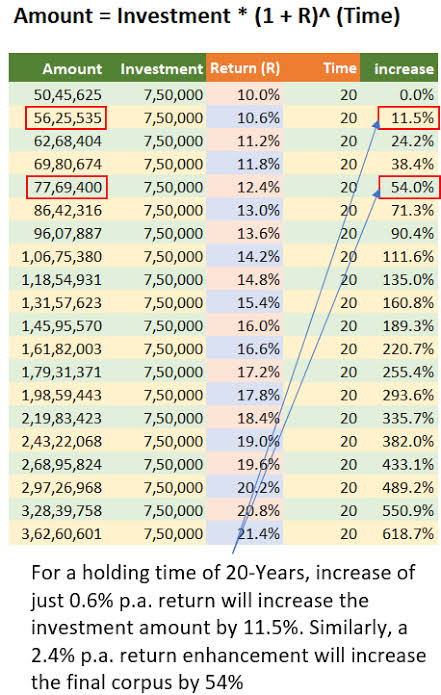
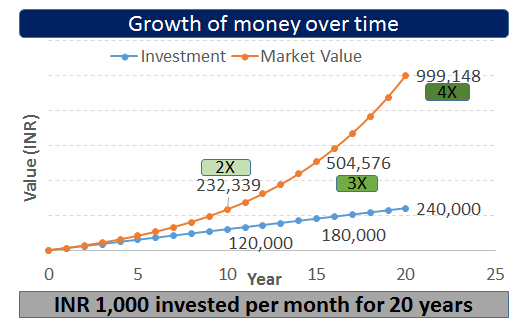
The power of compounding refers to the ability of an investment to generate earnings on both the original principal amount and the accumulated interest over time, leading to exponential wealth growth. This "interest on interest" effect, which Albert Einstein reportedly called the "world's eighth wonder," is a cornerstone of long-term financial success.
Key Insights
-
Time is a critical factor: The longer your money has to compound, the more significant the growth becomes. Starting early, even with small amounts, can have a massive impact over decades compared to starting later with larger investments.
-
Exponential vs. Linear Growth: Unlike simple interest, which grows linearly based only on the initial principal, compounding creates a "snowball effect" where the growth rate accelerates over time.
-
Mitigates Inflation: Compounding helps investments grow at a rate that can outpace inflation, thus preserving the purchasing power of your money over time.
-
Maximizing Returns: Reinvesting any dividends or capital gains back into your investment amplifies the compounding effect by increasing the principal base for future earnings.
How Compounding Works: An Example
If you invest INR 1,00,000 at an annual interest rate of 10%, the power of compounding is evident over time:
Simple vs Compound Interest (₹1,00,000 @ 10% p.a.)
| Year |
Simple Interest Earned Annually |
Compound Interest Earned Annually |
Total Value (Simple) |
Total Value (Compound) |
| 1 |
₹10,000 |
₹10,000 |
₹1,10,000 |
₹1,10,000 |
| 2 |
₹10,000 |
₹11,000 |
₹1,20,000 |
₹1,21,000 |
| 5 |
₹10,000 |
~₹14,641 |
₹1,50,000 |
~₹1,61,051 |
| 10 |
₹10,000 |
~₹23,579 |
₹2,00,000 |
~₹2,59,374 |
After 10 years, the compound interest investment results in over INR 59,000 more than the simple interest investment, purely due to earning interest on interest.